



Незалежно від того, чи керуєте ви командами бізнес-безпеки, очолюєте екіпажі outdoor-експедицій, організовуєте роботу логістичних автопарків або керуєте морськими суднами, надійне портативне комунікаційне обладнання є обов’язковим. Неправильний вибір радіостанцій може призвести до втрати сигналу, непорозумінь, ризиків для безпеки та зайвих довгострокових витрат. Як професійний виробник радіостанцій, QYT підготував цей повний посібник покупця, щоб розібрати всі основні типи радіостанцій, відмінності частотних діапазонів, спеціалізовані морські моделі та варіанти форм-факторів, допомагаючи вам підібрати радіостанції відповідно до конкретних робочих сценаріїв.
Аналогові, цифрові та PoC-радіостанції: порівняння основних характеристик
Три основні технології радіозв’язку домінують на ринку, кожна з яких адаптована до різних бюджетів, вимог до покриття та умов використання. У таблиці нижче наведено їхні основні переваги, недоліки та відповідні сценарії застосування:
|
Характеристика |
Аналогові радіостанції |
Дворежимні цифрові радіостанції |
Радіостанції PoC у загальнодоступній мережі |
|
Покриття сигналу |
Короткий і середній радіус дії (1–5 км) |
Середній і великий радіус дії зі стабільною якістю звуку |
Необмежена відстань у межах покриття стільникового сигналу |
|
Початкова вартість придбання |
Низька, бюджетна |
Середній ціновий сегмент |
Середня або висока початкова вартість |
|
Періодичні витрати |
Без щомісячної плати |
Без постійних витрат на обслуговування |
Потрібна щомісячна підписка на передачу даних SIM-карти |
|
Якість голосового звуку |
Схильність до шумів і перешкод, коли далеко від джерел сигналу |
Стабільно чистий звук до виходу за межі ефективного радіуса дії |
Звук високої чіткості, залежить лише від стабільності локальної мережі 4G/5G |
|
Основні сценарії застосування |
Роздрібні магазини, локальні тимчасові заходи, патрулювання об’єктів безпеки |
Будівельні майданчики, великі склади, промислові команди безпеки |
Міжміська логістика, автопарки вантажівок для далеких перевезень, управління муніципальною диспетчеризацією |
Аналогові радіостанції
Як традиційний і найпоширеніший засіб зв’язку, аналогові радіостанції передають безперервні голосові сигнали на фіксованих частотах. Їхні найбільші переваги — простота використання та низька вартість входу. Головний недолік — погіршення сигналу: шуми та спотворення звуку стають значними зі збільшенням відстані зв’язку.
Цифрові радіостанції
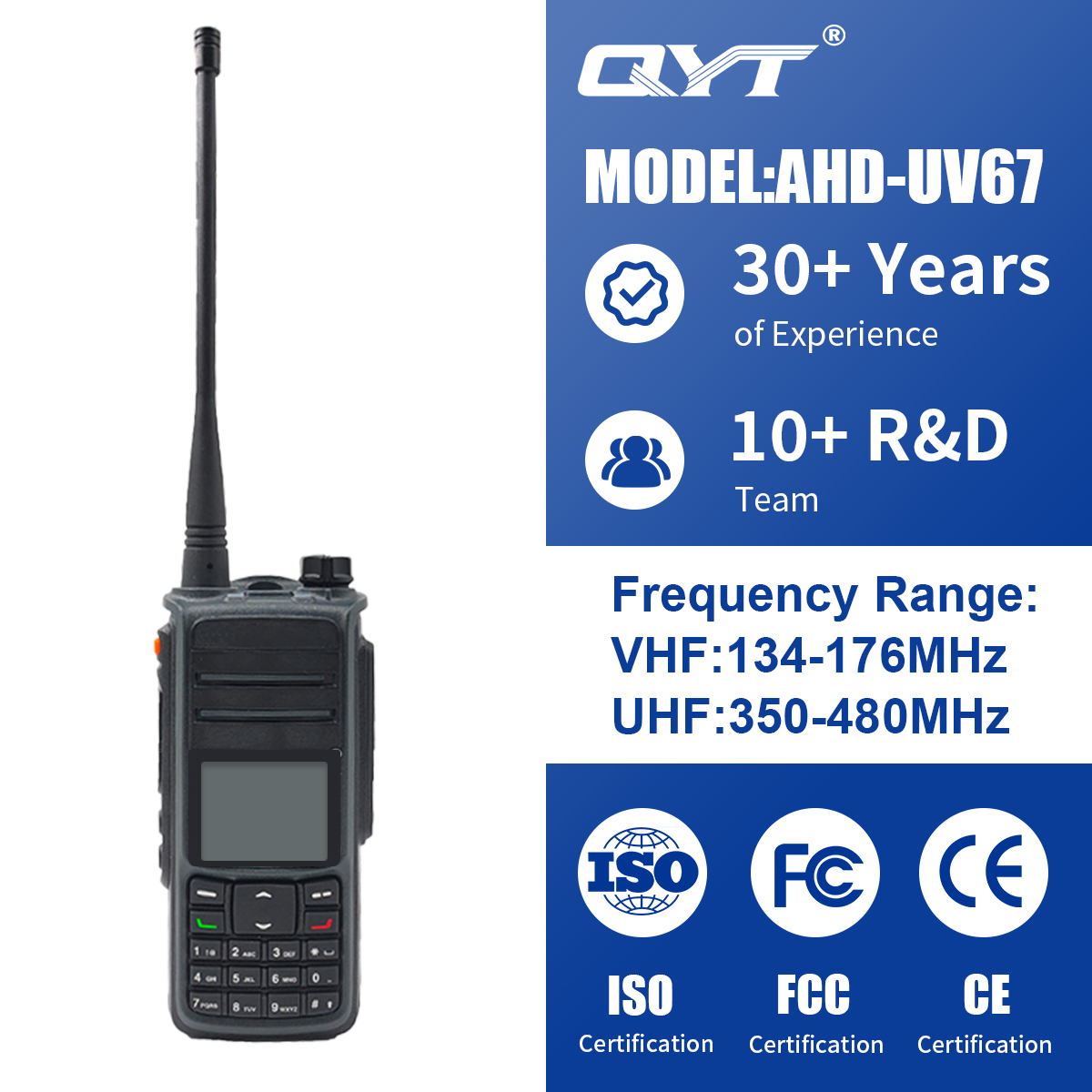
Пристрої, такі як портативна радіостанція зв’язку QYT AHD-UV67використовують цифрові протоколи передачі та перетворюють голос на пакети даних для передавання. Вони забезпечують кришталево чистий звук, вбудоване голосове шифрування для конфіденційного зв’язку, довший час роботи від акумулятора та вищу швидкість обробки даних. Важливе зауваження: окремі цифрові радіостанції не можуть з’єднуватися з аналоговими радіостанціями, тоді як дворежимні цифрові пристрої підтримують плавне перемикання між аналоговим і цифровим режимами для сумісності між різними пристроями.
PoC-радіостанції загальнодоступної мережі
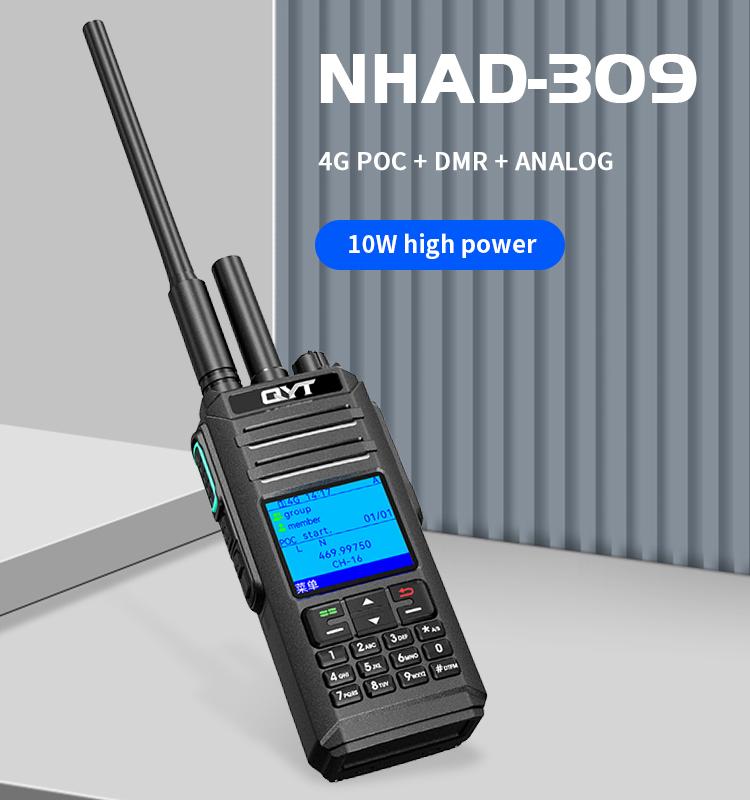
PoC-радіостанції працюють так само, як мобільні телефони: у них вставляються SIM-карти, а зв’язок здійснюється через стільникову інфраструктуру 4G/LTE/5G. Головна перевага — необмежена відстань зв’язку там, де доступний стільниковий сигнал, що робить їх найкращим вибором для координації автопарків по всій країні. Єдиними постійними витратами є регулярна оплата тарифного плану передачі даних для встановленої SIM-карти. Серія QYT NH, зокрема NH-20,NHAD-309і NH-85 — це зрілі портативні 4G PoC-радіостанції, створені для міжрегіонального командного зв’язку.
Частотні діапазони VHF проти UHF: вибирайте залежно від робочого рельєфу
Портативні наземні радіостанції переважно використовують два частотні діапазони: VHF (136–174 МГц) і UHF (400–470/480 МГц). Вибір неправильного діапазону призведе до частих втрат сигналу та слабкого прийому.
Діапазон VHF (136–174 МГц)
Радіохвилі VHF мають довші довжини хвиль із чудовими властивостями дифракції, що дозволяє сигналам плавно огинати пагорби, густі дерева та відкриті водні поверхні.
Найкращі умови роботи: Відкриті сільськогосподарські угіддя, морська навігація, польові лісогосподарські роботи та великі відкриті природні території.
Діапазон UHF (400–470/480 МГц)
Хвилі UHF коротші, але мають кращу здатність до проникнення, легко проходячи крізь бетонні стіни, сталеві конструкції, гіпсокартон і щільну міську забудову.
Найкращі умови роботи: Внутрішні офісні комплекси, багатоповерхові міські будівлі, закриті склади та виробничі фабрики.
Порада експерта: однодіапазонні та дводіапазонні радіостанції
Однодіапазонні радіостанції передають і приймають сигнали лише у VHF або UHF. Дводіапазонні радіостанції UV, такі як серія QYT UV, підтримують одночасний моніторинг і передачу в обох частотних діапазонах, подібно до смартфонів із двома SIM-картами, усуваючи ризик повного розриву зв’язку на змішаній місцевості.
Спеціалізовані морські VHF-трансивери: створені для суворих морських умов
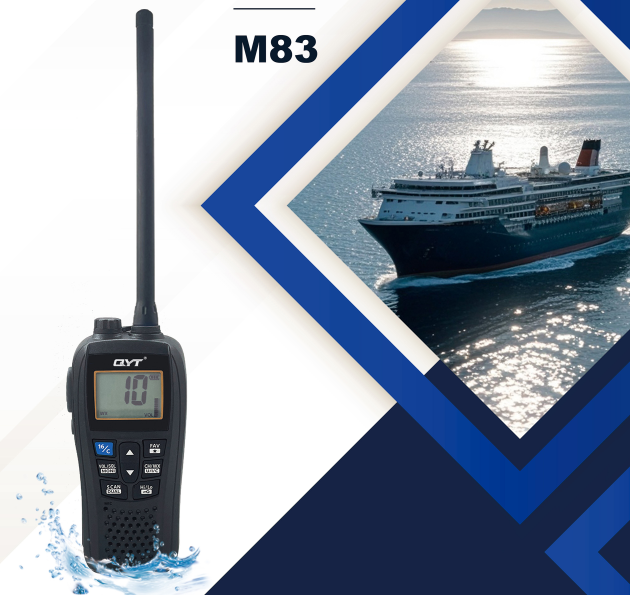
Звичайні наземні радіостанції не можуть витримати корозію від солоної води, постійну вологість і випадкове занурення на водному транспорті. Спеціально створені морські VHF-трансивери, зокрема QYT M83 відповідають повним стандартам Міжнародної морської організації (IMO) і мають три основні ексклюзивні функції:
1.Сертифікація водонепроникності IP67: Витримує занурення у воду на глибину 1 метр до 30 хвилин без пошкодження внутрішніх електронних схем.
2.Технологія плавання та блимання: Радіостанція плаває, якщо її впустити за борт. QYT M83 оснащена нижнім світлодіодним підсвічуванням, яке автоматично блимає навіть у вимкненому стані, забезпечуючи швидке знаходження у темній нічній воді.
3.Функція Tri-Watch і запрограмовані міжнародні канали: Попередньо завантажені групи морських каналів США, міжнародні та канадські, включно з обов’язковим аварійним каналом 16 для сигналів лиха та спеціальними каналами прогнозу погоди (WX) для отримання сповіщень про морську погоду в реальному часі.
Портативні та автомобільні мобільні трансивери: підберіть відповідно до потреб у мобільності
Окрім частоти та типу мережі, радіостанції поділяються на два основні форм-фактори залежно від потреб у мобільності: портативні ручні пристрої та автомобільні мобільні трансивери.
Портативні двосторонні радіостанції
Легкі портативні радіостанції з живленням від акумулятора, вбудованими антенами та затискачами для кріплення на поясі.
•Типова вихідна потужність: від 0,5 Вт до 5 Вт
•Переваги: повністю автономна робота, не потребують зовнішнього живлення, легко переносити під час піших патрулювань
•Ідеальні користувачі: охоронці, персонал заходів, піші польові патрульні команди
Автомобільні/суднові мобільні трансивери
Призначені для постійного або напівпостійного встановлення всередині транспортних засобів, суден або стаціонарних базових станцій. Вони отримують живлення безпосередньо від акумуляторів транспортних засобів і потребують окремих зовнішніх антен із високим коефіцієнтом підсилення.
•Типова вихідна потужність: від 10 Вт до понад 50 Вт
•Переваги: надзвичайно велика дальність зв’язку, стабільне безперервне живлення, стабільна якість сигналу на великих відстанях
•Ідеальні користувачі: логістичні автопарки, рятувальні судна, пошуково-рятувальні автомобілі та диспетчерські команди таксі
Швидкий перелік для вибору ідеальної радіостанції
Скористайтеся цим простим посібником зіставлення, щоб миттєво звузити вибір пристрою:
1.Потрібен необмежений зв’язок між містами для автопарків → Оберіть радіостанції PoC у загальнодоступній мережі
2.Працюєте всередині багатоповерхових будівель або промислових фабрик → Оберіть цифрові радіостанції UHF із подвійним режимом
3. Керуйте яхтами, рибальськими човнами або комерційними суднами → обирайте морські VHF-трансивери, сертифіковані IMO IP67
4. Керуйте польовими бригадами на фермах або відкритих лісових територіях → обирайте портативні VHF-радіостанції
5. Прагніть до максимальної міжміської комунікації для автопарків → встановлюйте мобільні трансивери для транспортних засобів у парі з зовнішніми антенами з високим коефіцієнтом підсилення
Заключні слова
QYT розробляє все комунікаційне обладнання з акцентом на міцність, економічність і зручність використання. Незалежно від того, чи потрібен вам безпечний цифровий зашифрований зв’язок, загальнонаціональне покриття PoC без кордонів або надійність морського VHF-зв’язку для водних подорожей, ми пропонуємо цільові рішення для кожної галузі та середовища.
Якщо вам потрібна допомога з налаштуванням комунікаційної системи, поданням заявок на отримання місцевої радіоліцензії або підбором відповідних аксесуарів, зверніться до професійної команди QYT для безкоштовної технічної консультації та індивідуальних послуг із підготовки комерційної пропозиції.